Urban farragos
"Fárrago" from Latin "farrāgo" means 'a mixture of various
TIME OF DAY
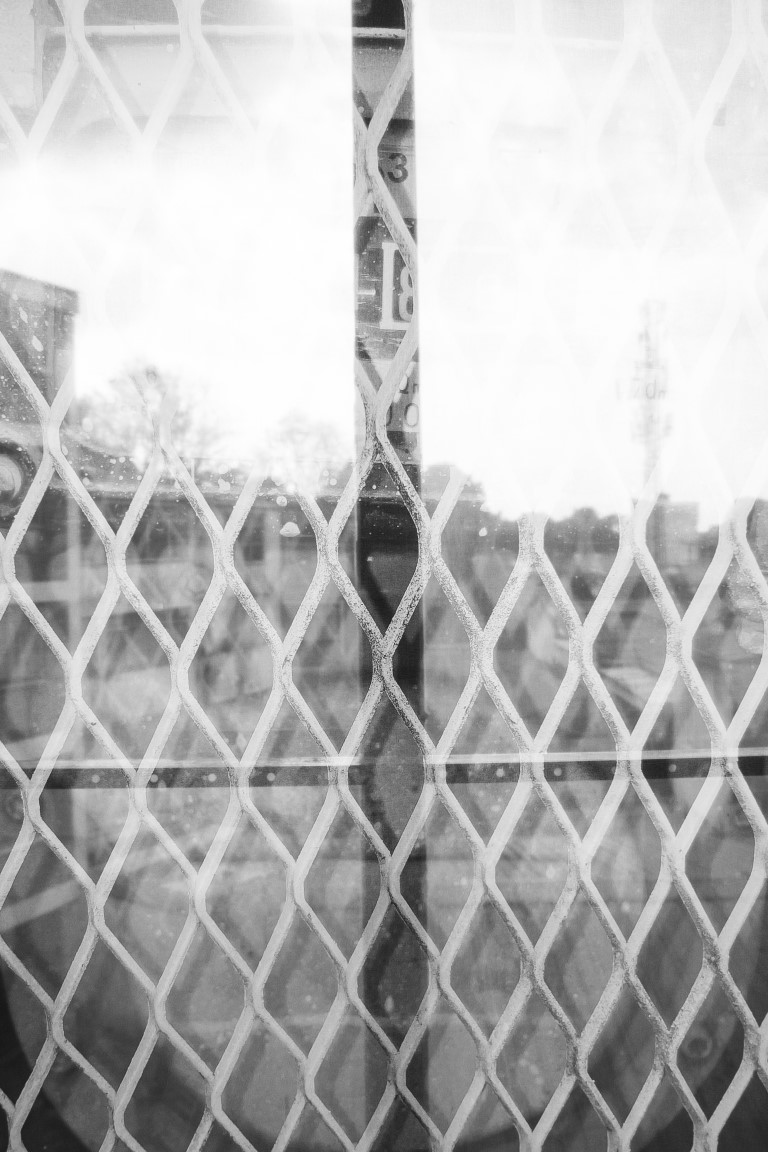
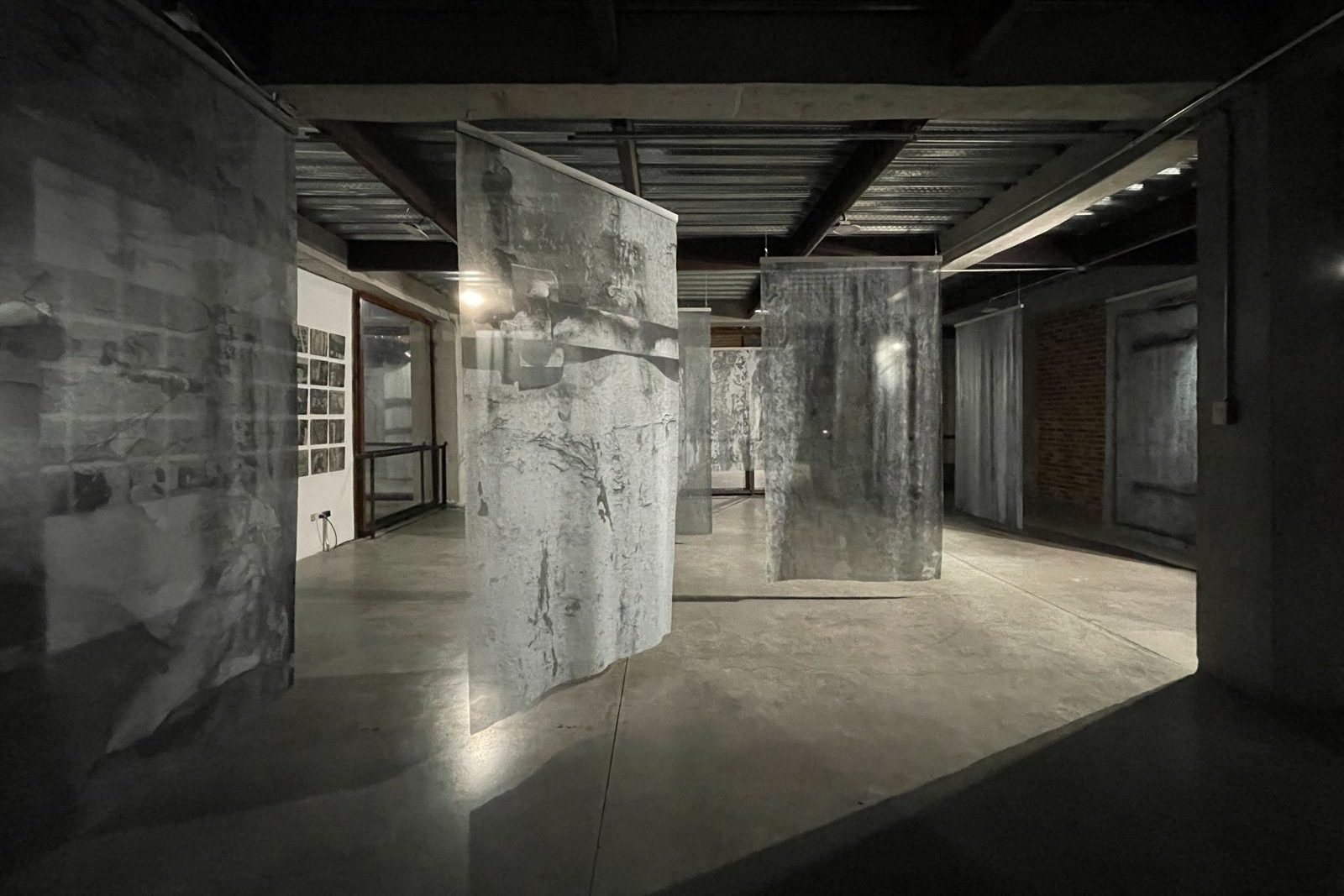
The installation mutates depending on the time of day; the light source implemented changes the visual characteristics of the veils, as well as the spatial sensation of the exhibition.
PALIMPSEST
The veils carry the city’s essence through layers and textures; they aim to portray the urban palimpsest, a fabric of overlaid information that carries a clear view of our relationship with the city and the passage of different actors throughout time.
BRICKS
The brick walls stand as quiet anchors within the installation, their material presence echoing the fabric of Bogotá, its façades, its weight, its accumulated time. Rather than functioning as mere partitions, they extend the city into the space, carrying a sense of density and permanence that grounds the surrounding elements.
SOLIDIFICATION
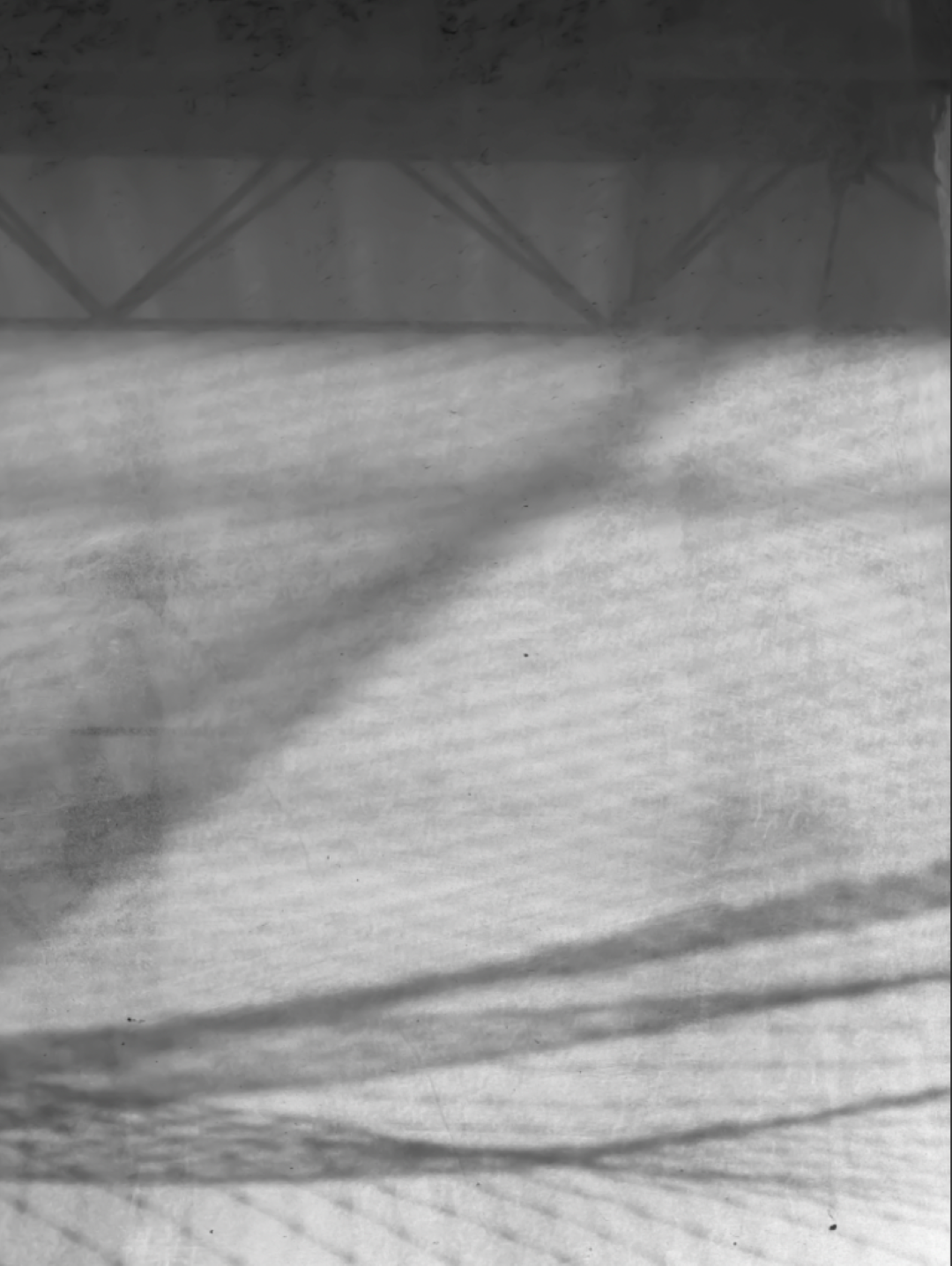
At night, the installation shifts as direct light cuts through the space, collapsing the distance between the immaterial and the tangible. The veils, once read as fleeting and atmospheric, begin to assert themselves as defined, almost sculptural presences, their surfaces catching the light and holding it.
DUALITY
The viewer must walk among the veils of the installation to reach the wall of concrete slabs arranged in grids. The two types of works complement each other, as they blend the feminine, light, and moving form of the veil with the masculine, static, and organized form of the slabs.
GRIDS AND REPETITION
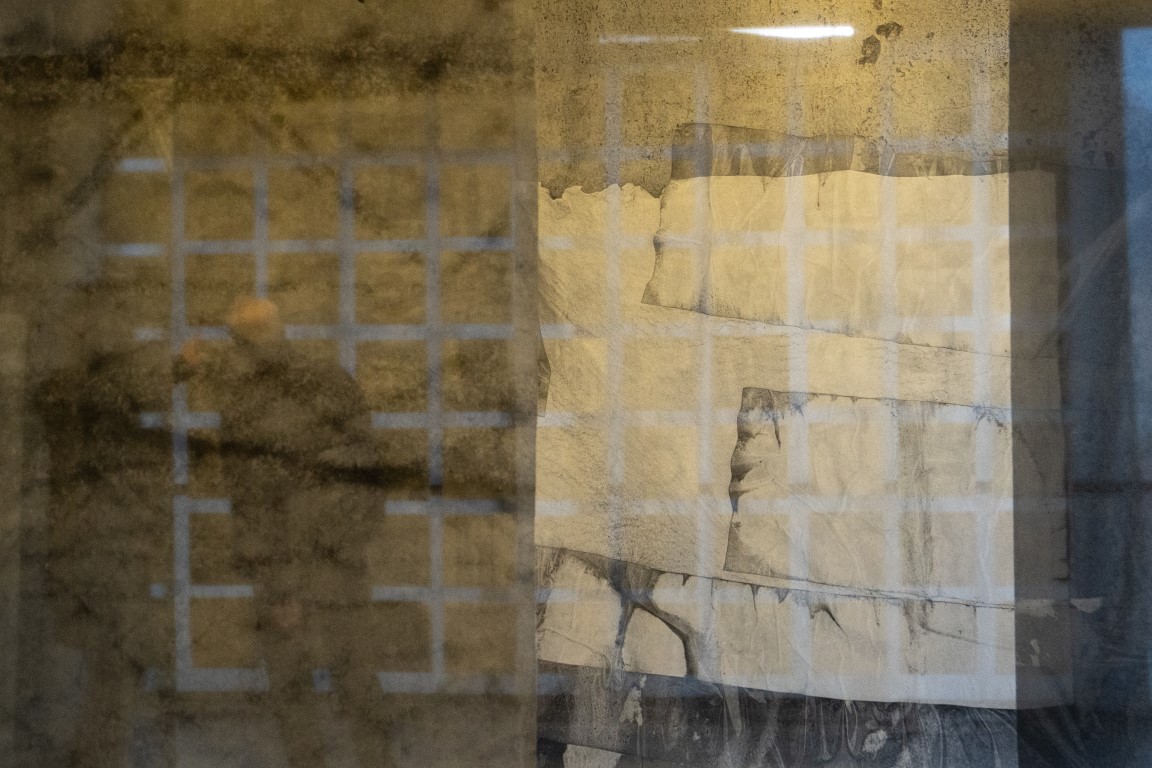
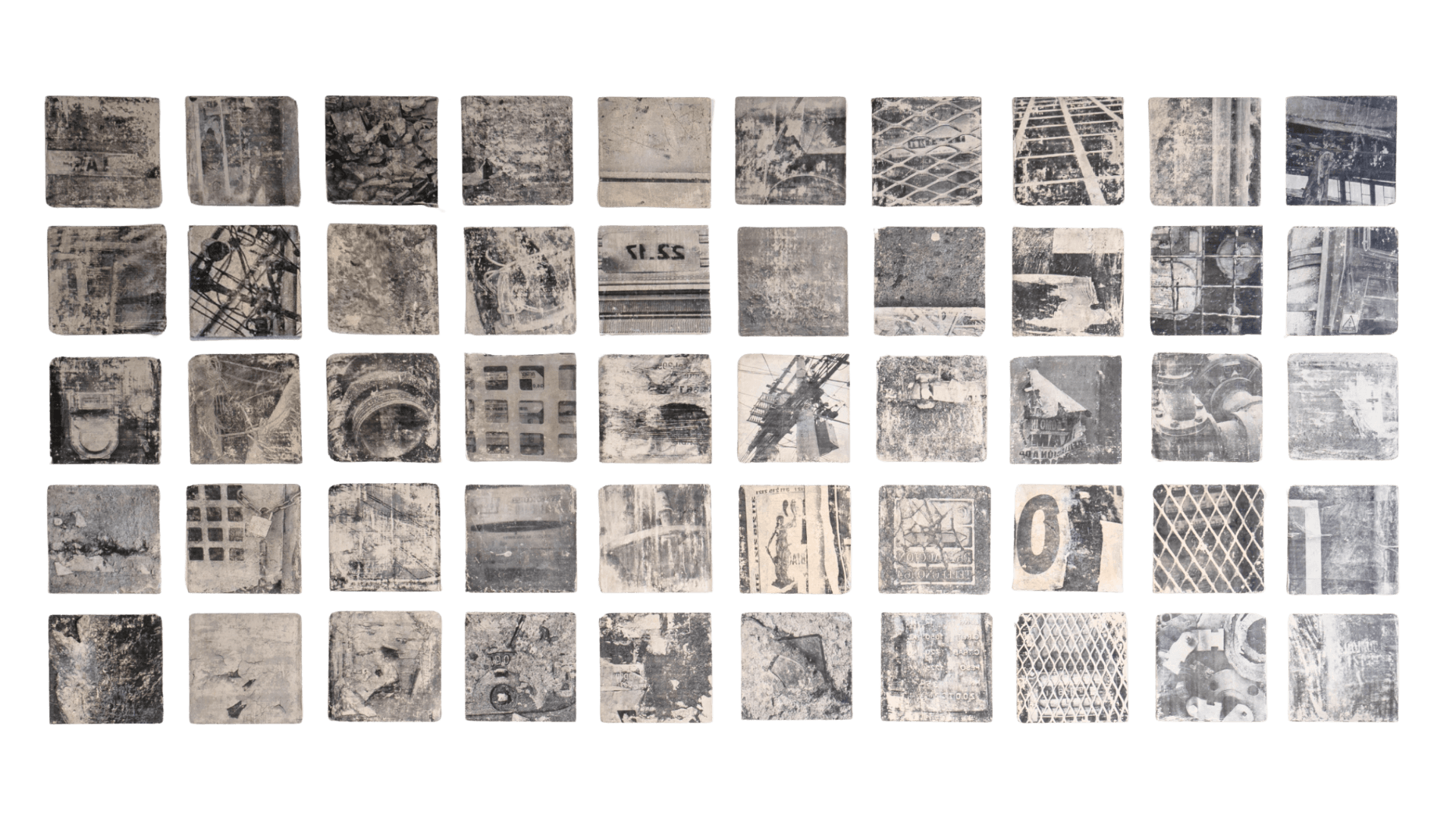
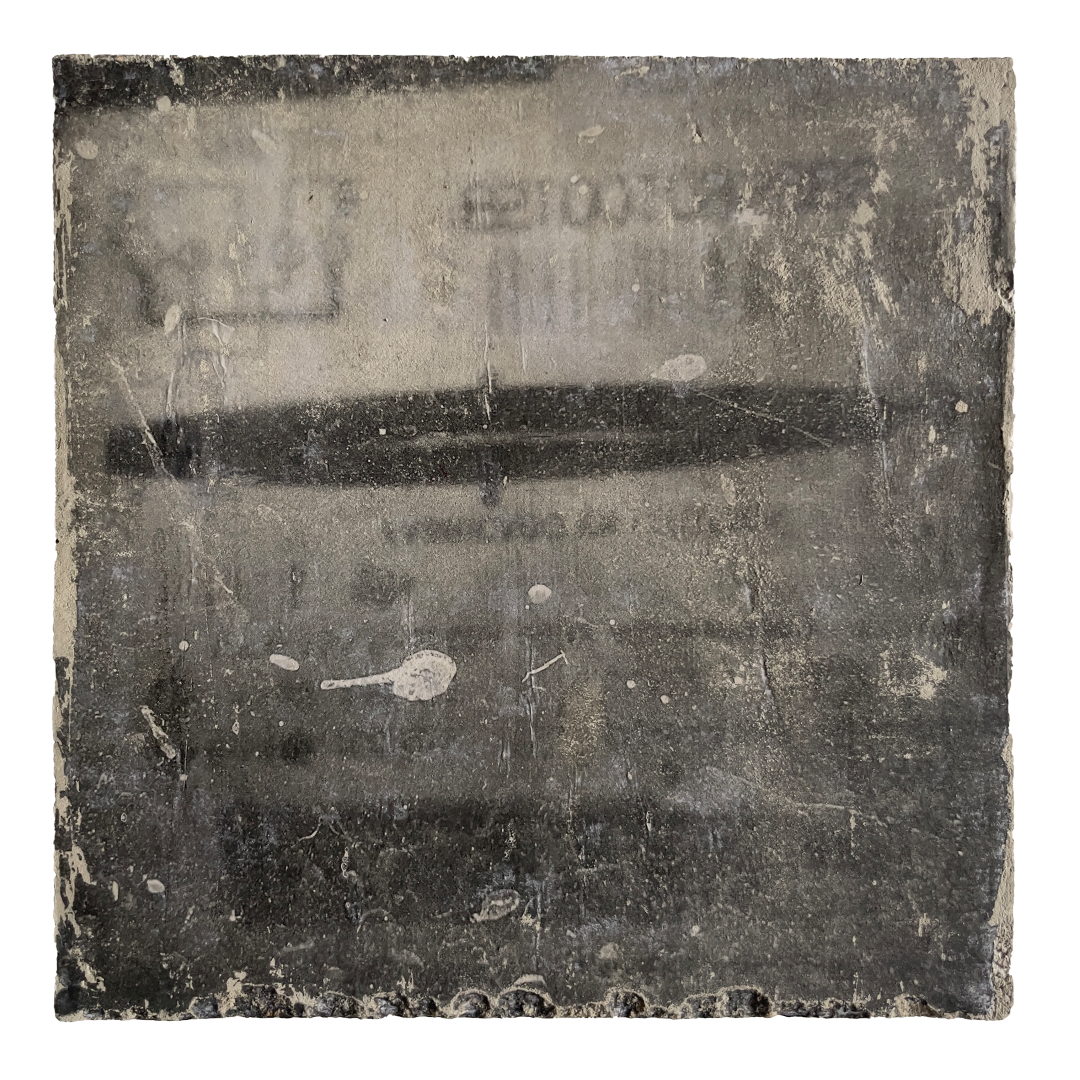
The slabs arranged on the walls are manually crafted in the studio. None are exactly the same; they vary slightly in color, texture, weight, and dimension, as they are made from different concrete mixtures and hold varied surfaces.
ABOUT THE WORK
Urban Farragos (Fárragos en lo Urbano) invites viewers to immerse themselves in an aesthetic and conceptual field that enables a deeper contemplation of Bogotá’s language.
The project draws attention to overlooked places, textures, and symbols, offering a visual reading of the codes that construct the city’s identity. Centered on notions of disorder and perceived insignificance, the work foregrounds what is often excluded from view.
Within this framework, the concrete slabs hold images the way a negative film does:
unselected, reversed, and often dismissed, containing frames that would rarely be chosen
for positivization. Alongside the veils, these elements appeal to the unconscious, opening a space where memory lingers in its raw, unfiltered state and reconnects with the environments we inhabit.




SYMBOLIC MEANING AND ESSENCE
PATH AND TRAIL OF THE
INFORMATION
The slabs invite the spectator to reflect on the journey of information within the image, as part of it gets lost in the translation process into concrete. The photograph, in this case, plays with the texture and previous noise of the slab without overshadowing it. It exposes both the raw material and the errors and marks of its production.
The spontaneity of these frames without subject or action invites us to recognize Bogotá from the objects, angles, and textures that are not normally portrayed as part of our collective imagination. The installation consists of one hundred fifty-seven (157) slabs distributed on four (4) different walls, seeking analysis through volume and repetition.
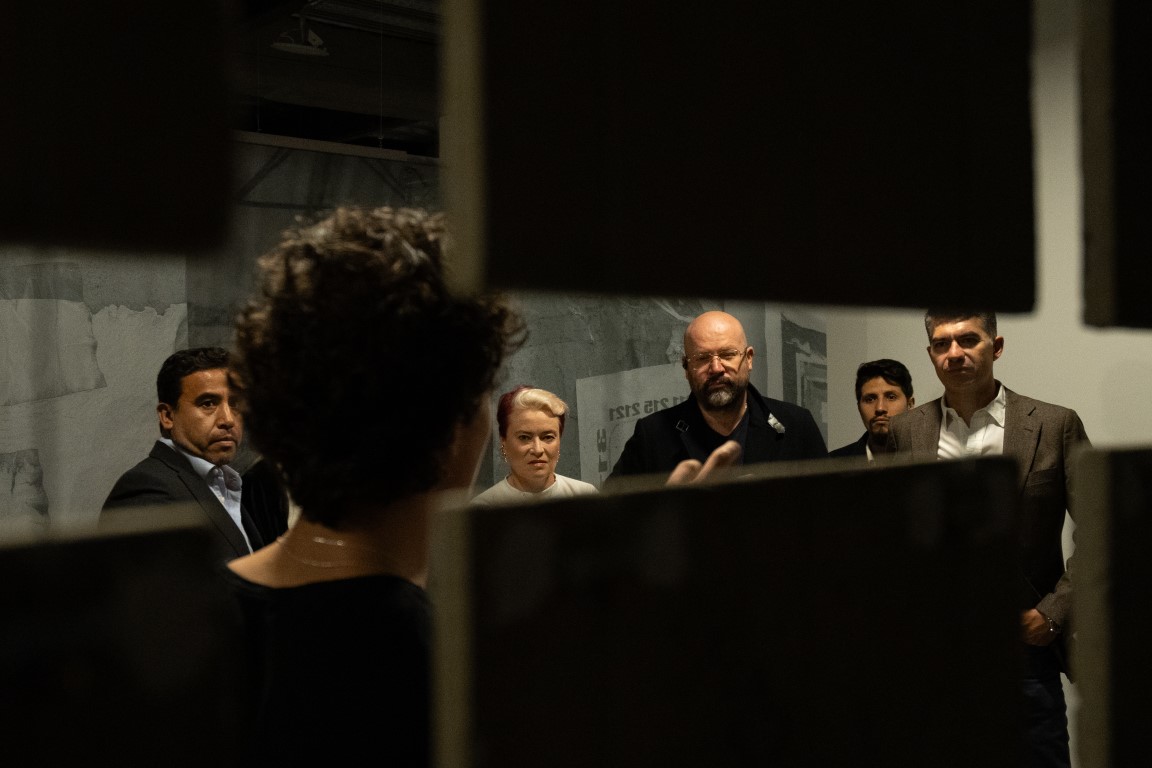
Photo of conversation with Oscar Posada,
Colombian Artist and Curator
The pieces come to life as they are traversed; the interplay of shadows and the fluid motion of the veils immerse the viewer.
RESEARCH OF MATERIALS
(WORK IN CEMENT)
TRANSFERATION
Once the printed image is obtained,
it is transferred to a slab of cement
using a technique that separates
the vehicle from the pigment, two
main components inherent in the
history of painting in art.
REFERENCE
This technique integrates three miracles
of the 20th century: concrete (in the
structural realm), the cell phone (as a
means of communication), and
photocopying (in the realm of image
reproduction and accessibility).
CELEBRATION OF THE EXHIBIT IN ALLIANCE WITH AGUARDIENTE NECTAR
To celebrate the exhibition, we collaborated with Aguardiente Nectar brand, given the strong bonds between aguardiente and Bogotá. We created 30 limited edition bottles, drawing direct inspiration from the images that make up the artwork.
VISITORS
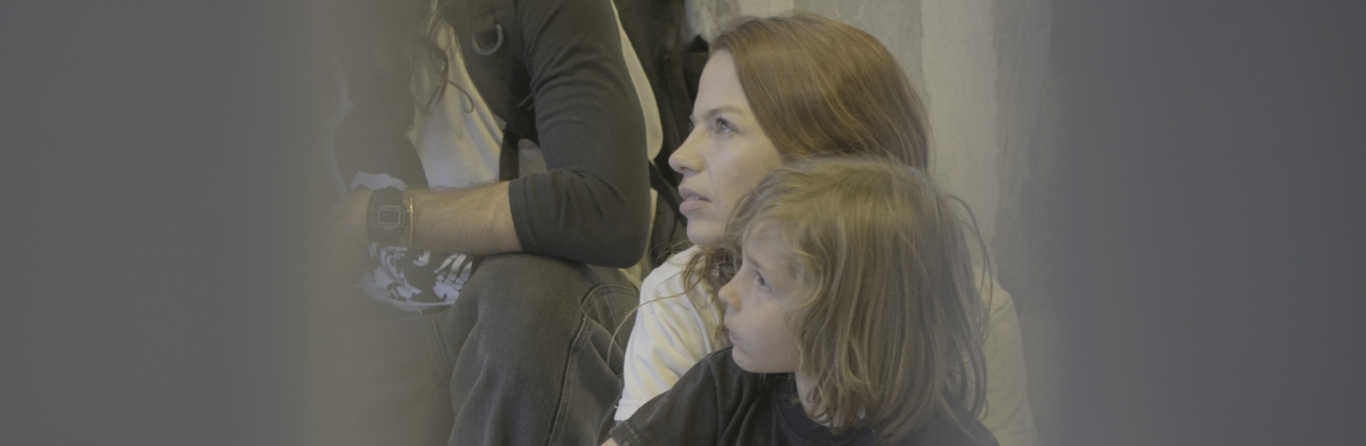
During our activities, we discussed the printing technique used in the artwork and its symbolic and historical significance.
In addition to this, we covered key aspects of production, installation, and the location where we implemented this exhibition, emphasizing the importance of identity in the territory. Throughout its evolution, we managed to attract 300 spectators, 150 students attended the conservatories, in addition to conducting an in-person master class based on the artwork for 400 university students.
MORE OF THE EXHIBITION
AUDIOVISUAL PIECE
This body of work features a teaser that highlights its key aspects, narrating part of the creative process
Seventy Second and Zero